
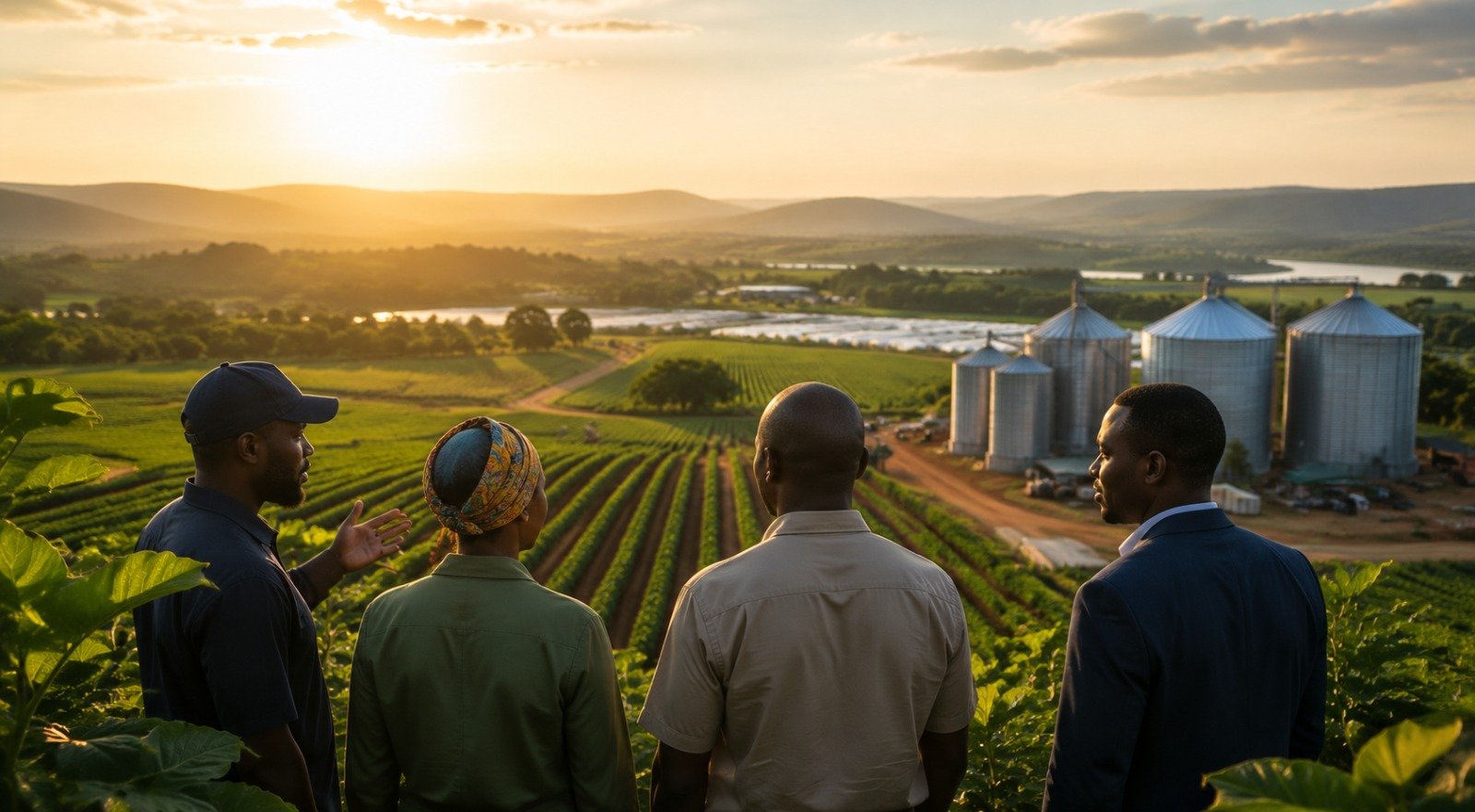
When agricultural projects fail, the causes are often attributed to financing, commodity prices, operational challenges or market conditions.
These factors certainly matter. But in our experience, many projects encounter serious difficulties long before any of those issues become relevant.
The seeds of success—or failure—are often planted during the earliest stages of project development.
Long before the first hectare is planted, before financing is secured, and before infrastructure is constructed, a project must establish the foundations that will support everything that follows.
Unfortunately, many investors and development groups underestimate the importance of these foundations.
As a result, projects that appear promising on paper struggle to gain traction on the ground.
The Absence of a Local Champion
One of the most common weaknesses we observe is the absence of a credible local champion.
Many investors arrive with technical expertise, financial resources and ambitious plans. Yet they often lack someone who understands the realities of the local environment and can bridge the gap between the project and the communities it hopes to work with.
A local champion is more than a representative.
- They understand the culture, the stakeholders, the history of the area and the informal dynamics that rarely appear in reports or feasibility studies.
- They can identify concerns before they become problems.
- They can build trust before negotiations begin.
- And they can provide valuable context when difficult decisions need to be made.
Without a strong local presence, projects often operate with incomplete information and unrealistic assumptions.
The Missing Voice of the Landowners
- Many development teams spend significant time engaging consultants, lawyers and government officials.
- Yet surprisingly little attention is sometimes given to creating a structured dialogue with the people who actually own or control the land.
- Large agricultural projects rarely involve a single landowner.
- In many African jurisdictions, land may involve multiple families, villages, community groups and traditional authorities.
- Without a clear mechanism for representing these interests, misunderstandings become inevitable.
- Projects move forward based on assumptions that may not reflect local realities.
- Concerns remain unaddressed.
- Expectations become misaligned.
- Over time, small issues can evolve into major obstacles.
- Successful projects recognize that landowners are not simply stakeholders. They are partners in the development process.
Community Support Cannot Be Assumed
- Many investors assume that communities will automatically support projects that promise jobs and economic activity.
- The reality is often more nuanced.
- Communities want to understand how a project will affect their lives.
- They want to know what opportunities will be created.
- They want clarity regarding education, healthcare, infrastructure and long-term development benefits.
- Most importantly, they want to feel that their voices are being heard.
- Community support is not created through presentations.
- It is created through engagement.
- Projects that invest time in listening, explaining and building relationships are often far more resilient than those that rely solely on formal agreements.
Language Is More Important Than Many Realize
- Communication is often underestimated during project development.
- Investors frequently assume that if discussions can take place in English or French, communication challenges have been solved.
- In reality, meaningful engagement often requires much more.
- Many communities communicate primarily through local languages and dialects.
- Important nuances can be lost when communication is filtered through multiple layers of translation.
- Questions may not be fully understood.
- Concerns may not be fully expressed.
- Opportunities for trust-building may be missed.
- Development teams that understand the linguistic realities of the areas in which they operate often have a significant advantage.
- Language is not simply a communication tool. It is a demonstration of respect and commitment.
Access Is Not an Afterthought
Another common mistake is focusing on land availability without fully evaluating access. A site may appear attractive on a map, but practical access can determine whether a project is economically viable.
- Road infrastructure.
- Seasonal accessibility.
- Logistics corridors.
- Distance from processing facilities.
- Connection to ports and markets.
- These considerations influence project economics from the very beginning.
- Too often, access is evaluated after land has already been identified.
- In our experience, it should be part of the initial assessment process.
- A project that cannot move people, equipment and products efficiently will face challenges regardless of the quality of the underlying land.
Government Buy-In Matters
Many investors view government engagement as a procedural step. Something to be addressed once the project is largely developed. This is often a mistake.
Successful projects require more than regulatory approvals. They require alignment. Governments have their own development objectives, priorities and concerns.
Agricultural projects can contribute to employment, food security, export growth and regional development.
When governments understand how a project supports these objectives, relationships become stronger and development pathways become clearer. Unfortunately, some investors approach government engagement as a final step, assuming that ministries will automatically support a project once it has been designed.
In practice, meaningful engagement should begin much earlier. Government stakeholders should understand the vision. They should understand the benefits. And they should feel that they are participants in the process rather than observers.
Projects do not succeed because governments grant approvals. They succeed because governments, communities, investors and operators share a common interest in their success.
Building Foundations Before Building Projects
The agricultural sector often focuses on tangible assets.
- Land.
- Infrastructure.
- Machinery.
- Processing facilities.
These assets are important. But they are built on foundations that are far less visible.
- Trust.
- Relationships.
- Community support.
- Local knowledge.
- Government alignment.
- Cultural understanding.
Without these foundations, even technically sound projects can struggle. With them, challenges become easier to overcome and opportunities become easier to realize.
The lesson is simple. Most agricultural projects do not fail because development began. They fail because the work required before development began was never fully completed.